

Preview of ship illustrations: Plans
As I’ve been working on the next series of illustrations in the style of technical drawings, I’ve decided to group the relevant galleries together. I hope this will make the site a bit clearer, even if you now have to click a few more times to get to the new illustrations. 😉
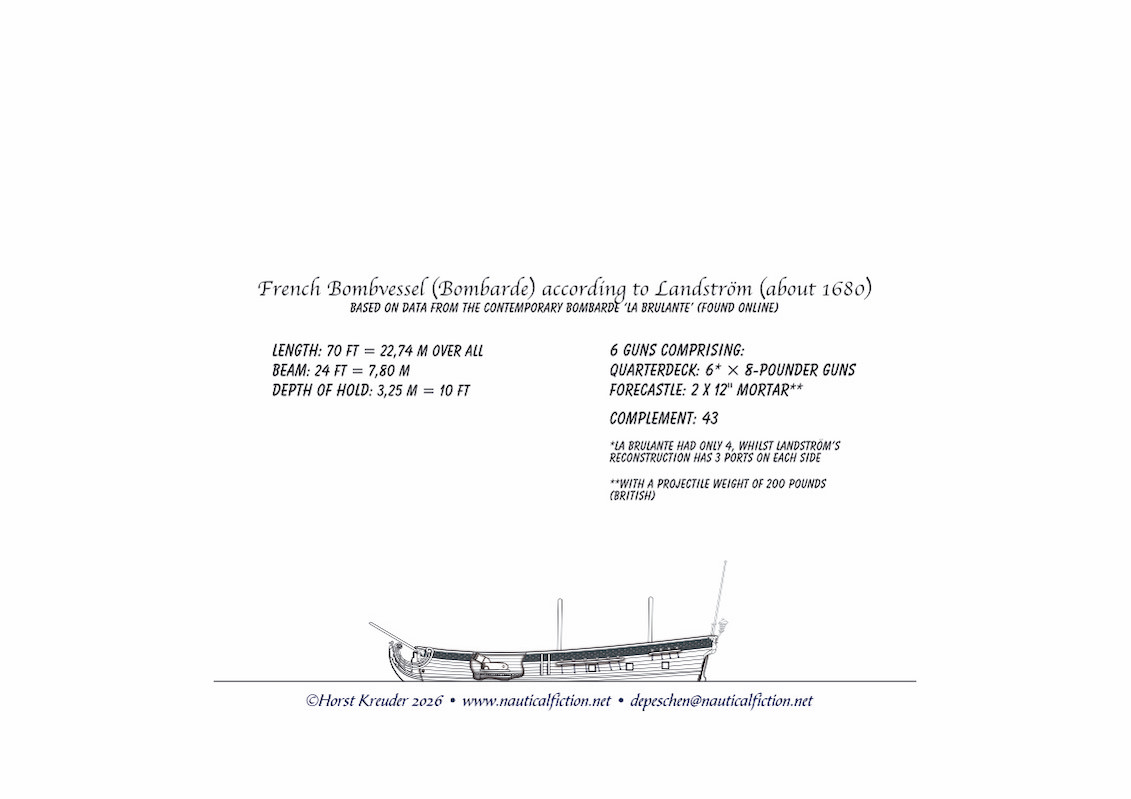
French Bombvessel (Ketch-Rigged) about 1680 according to Landström
The first ships to use explosive projectiles were essentially floating siege artillery. In the early days, the foremast was removed from heavily built ships. The space thus gained was used to mount one or two mortars. The steep angle of fire meant that, even from the sea, the shells could be fired over fortress walls and harbour jetties. The French were the first to employ this tactic, from around 1680.
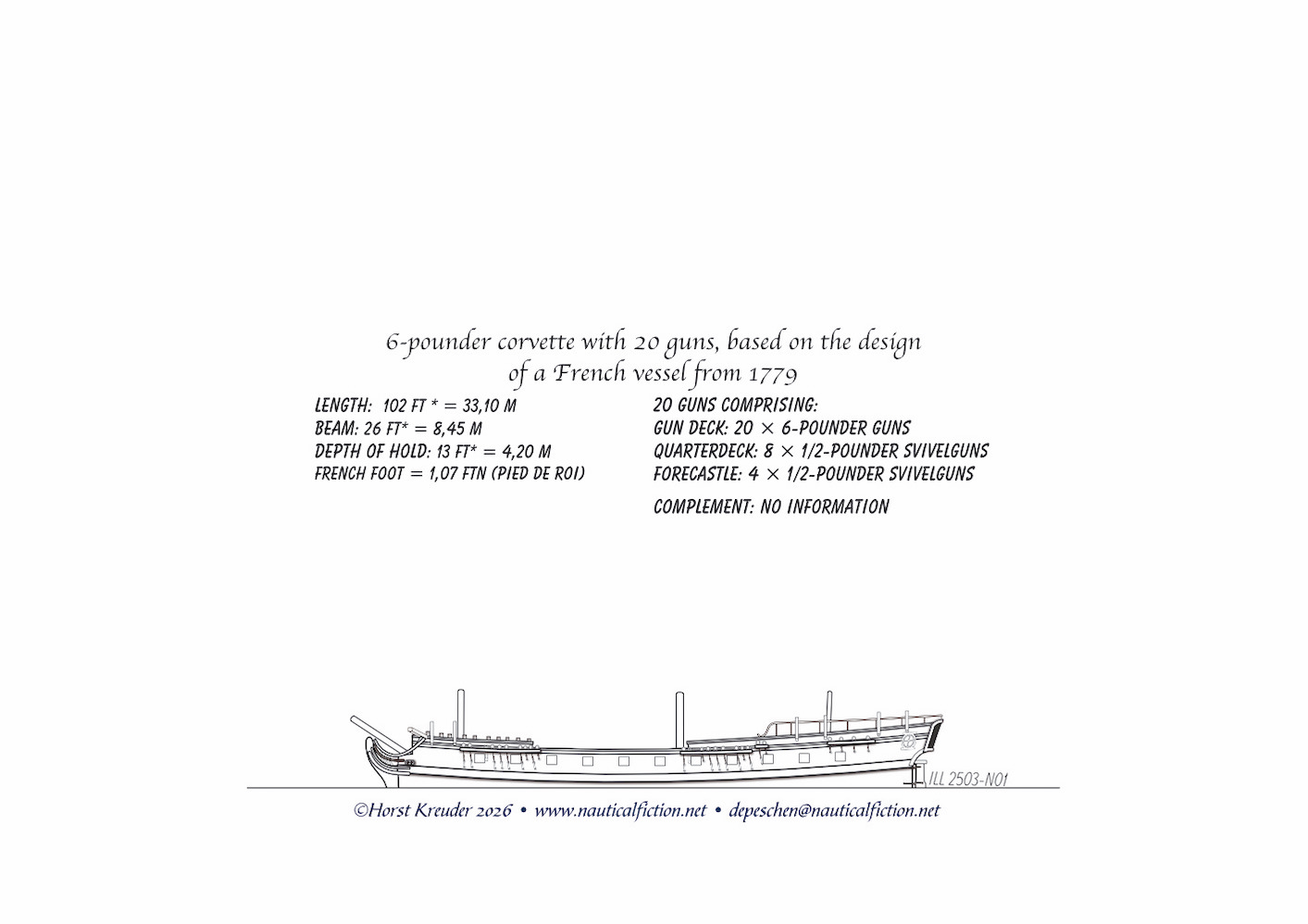
Corvette based on a French plan
The term ‘corvette’, referring to a full-rigged ship of a lower rank than a frigate, was used exclusively on the continent. That is why I looked for a French model here as well. Unfortunately, many elements were missing from the only plan dating from before 1800. I then filled these in based on my previous experience.
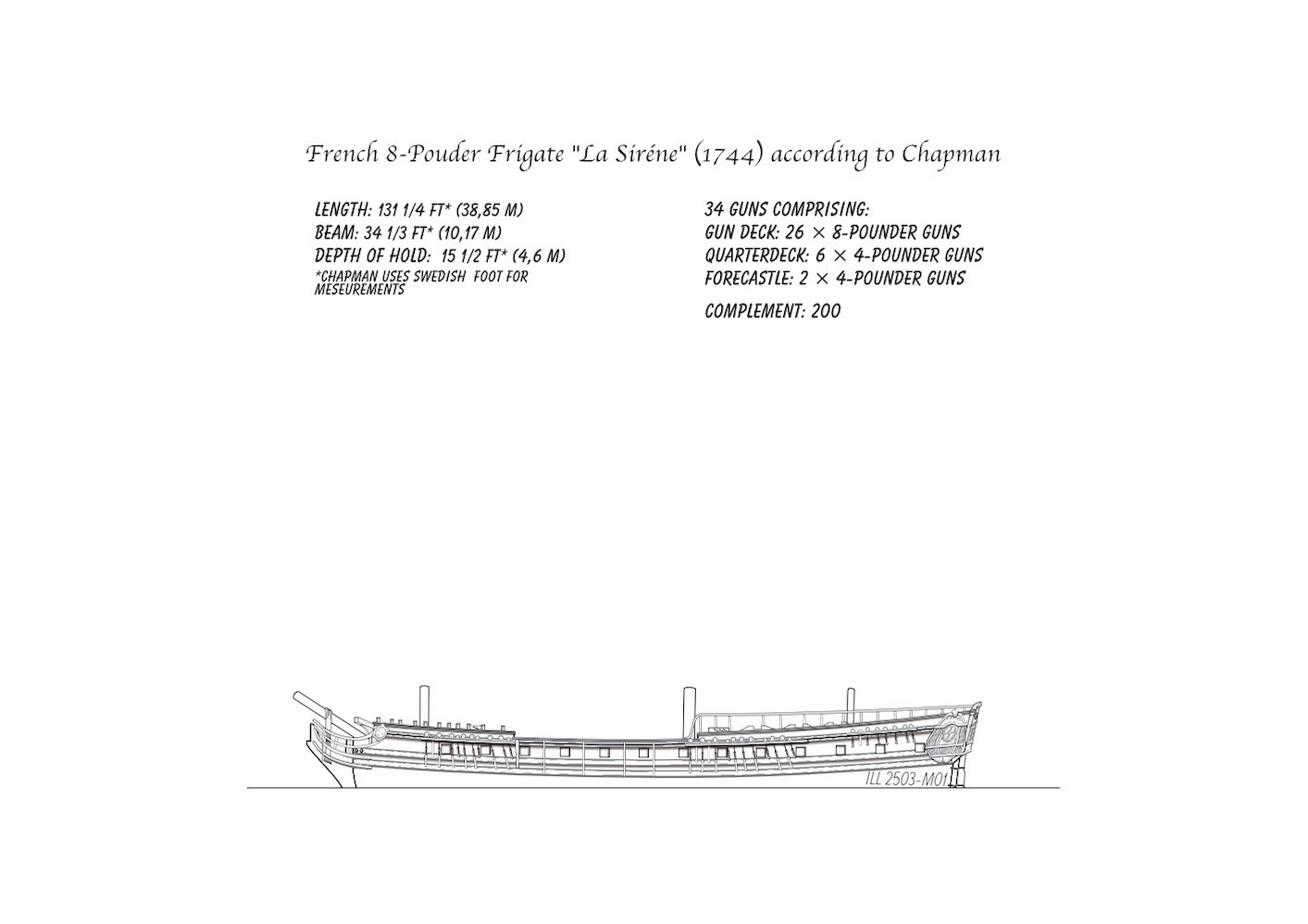
French-build frigate ‘La Sirene’ based on Chapman
I have also chosen a French design for the frigates. As original plans of French ships are hard to find online, I have once again referenced Chapman’s work. Although the ship dates from the mid-18th century, the plan was very detailed.
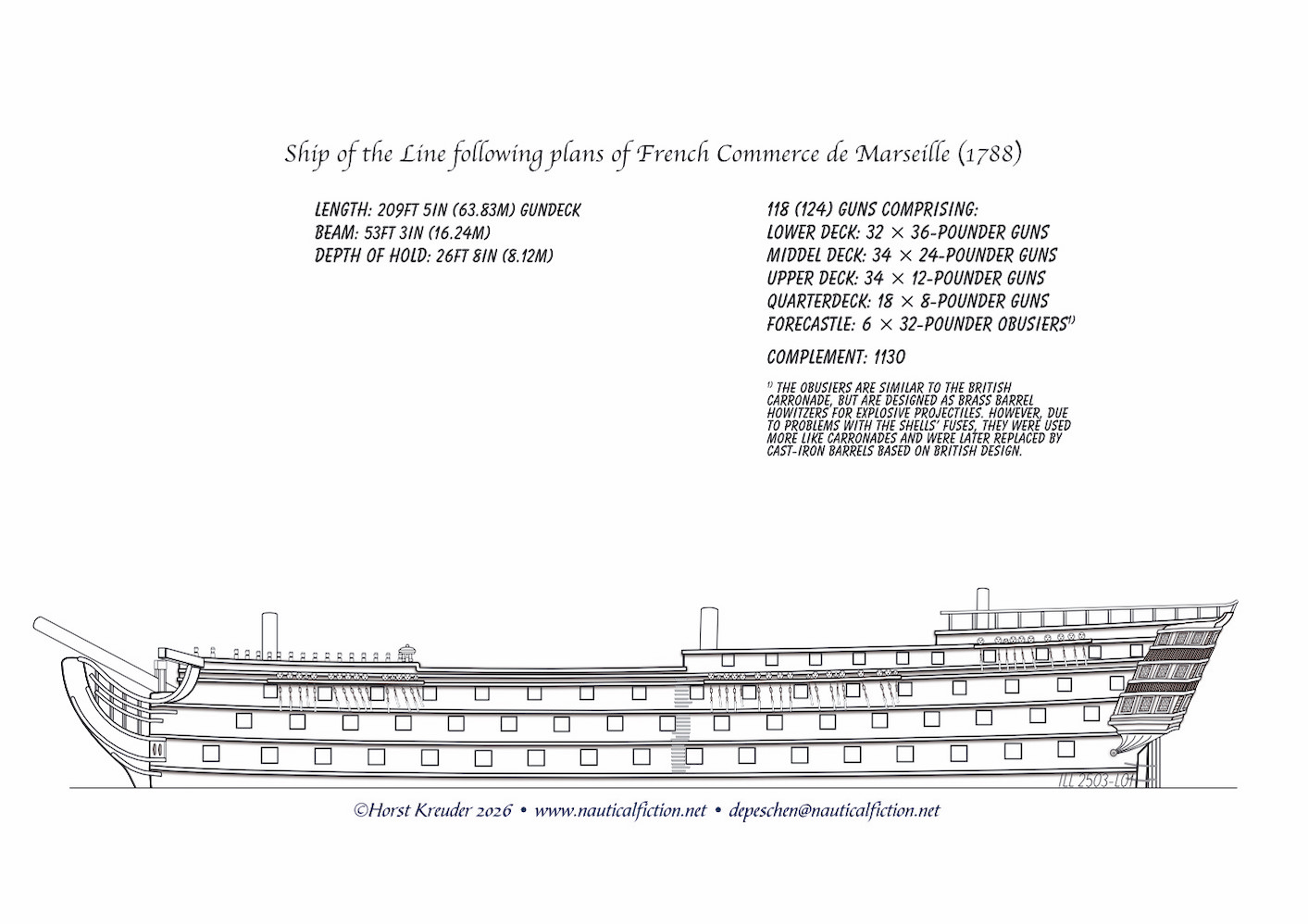
French-design ship of the line based on plans by the Commerce de Marseille (1788)
In contrast to the Royal Navy, the French Navy began classifying ships by their specific purpose in the 18th century. Here too, the ships of the line formed the pinnacle of the fleet. The primary ranks used by the British served in France only for detailed classification within the class. The French distinguished between ships of the line of the first to third ranks.

100 (102) Gun 1st Rate
Side view based on the design of the famous Victory. The typical British ship of the line with 100 guns. Similar to the second rank, the mounting options for guns were also expanded here. However, the number remained at around 100 guns, as the guns on the forecastle were replaced by heavy carronades. These did not count.

90 (98) Gun 2nd Rate
Side view based on plans for HMS Duke (leadship of the class of the same name) from 1777. Special feature: According to an article in the English Wikipedia, the Duke already had 98 guns. However, the plan shown here does not include the gun ports for the additional 8 guns on the quarterdeck.

74 Gun 3rd Rate
Illustration based on plans of HMS Alfred (leadship of the class of the same name) from 1778

50 Gun 4th Rate
Illustration based on plans of Portland-Class HMS Renown

44 Gun 5th Rate
Illustration based on plans of Roebuck-Class HMS Dolphin

24 Gun 6th Rate
Illustration based on plan of HMS Seahorse from 1770 rebuild
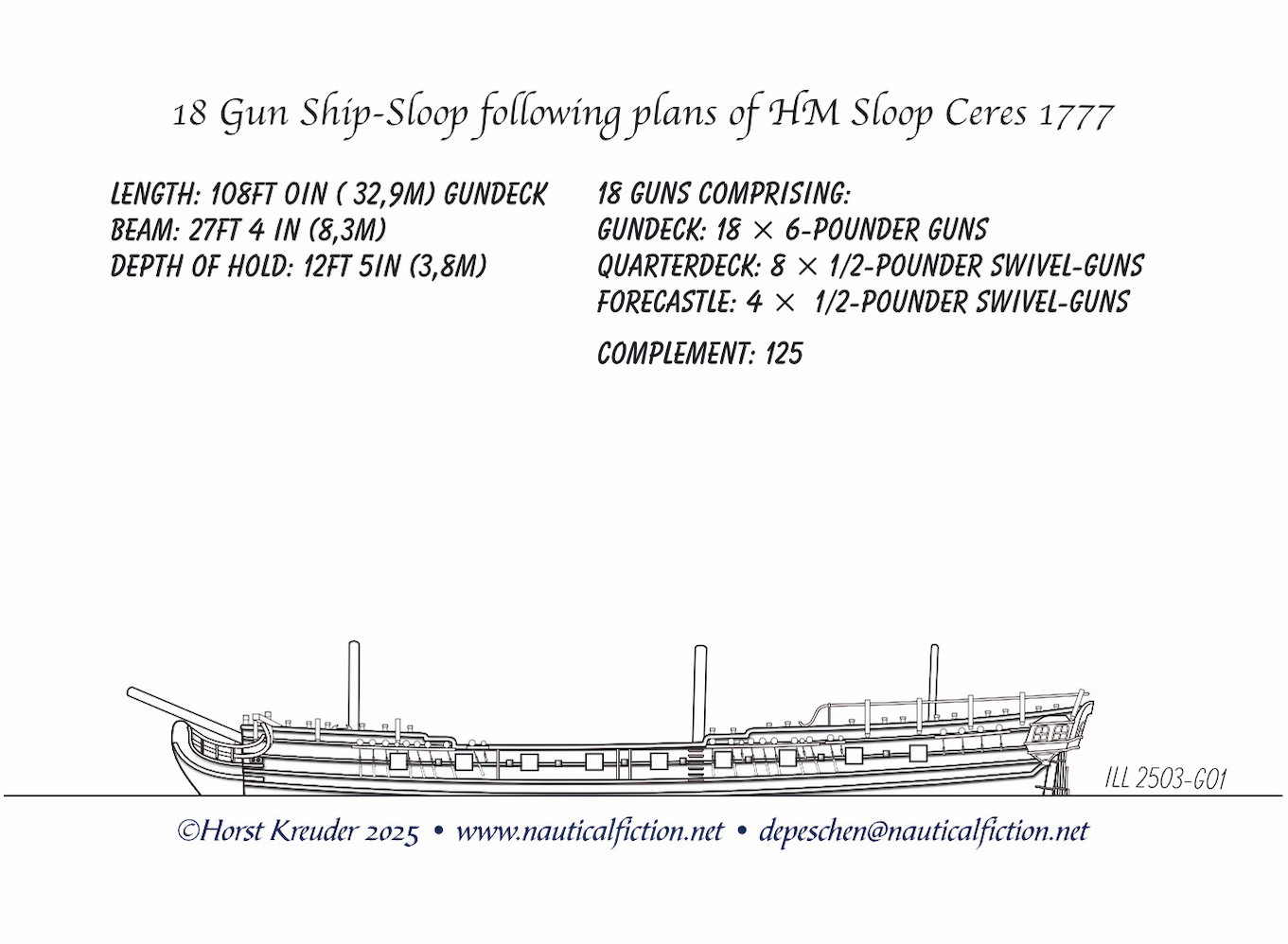
18 gun ship(rigged)-sloop
Full-rigged ships were also classified as sloops if they carried less than 20 guns. However, they were given the prefix ‘ship’ to refer to their rigging. This drawing is based on the plan of HM Sloop “Ceres” from 1777.
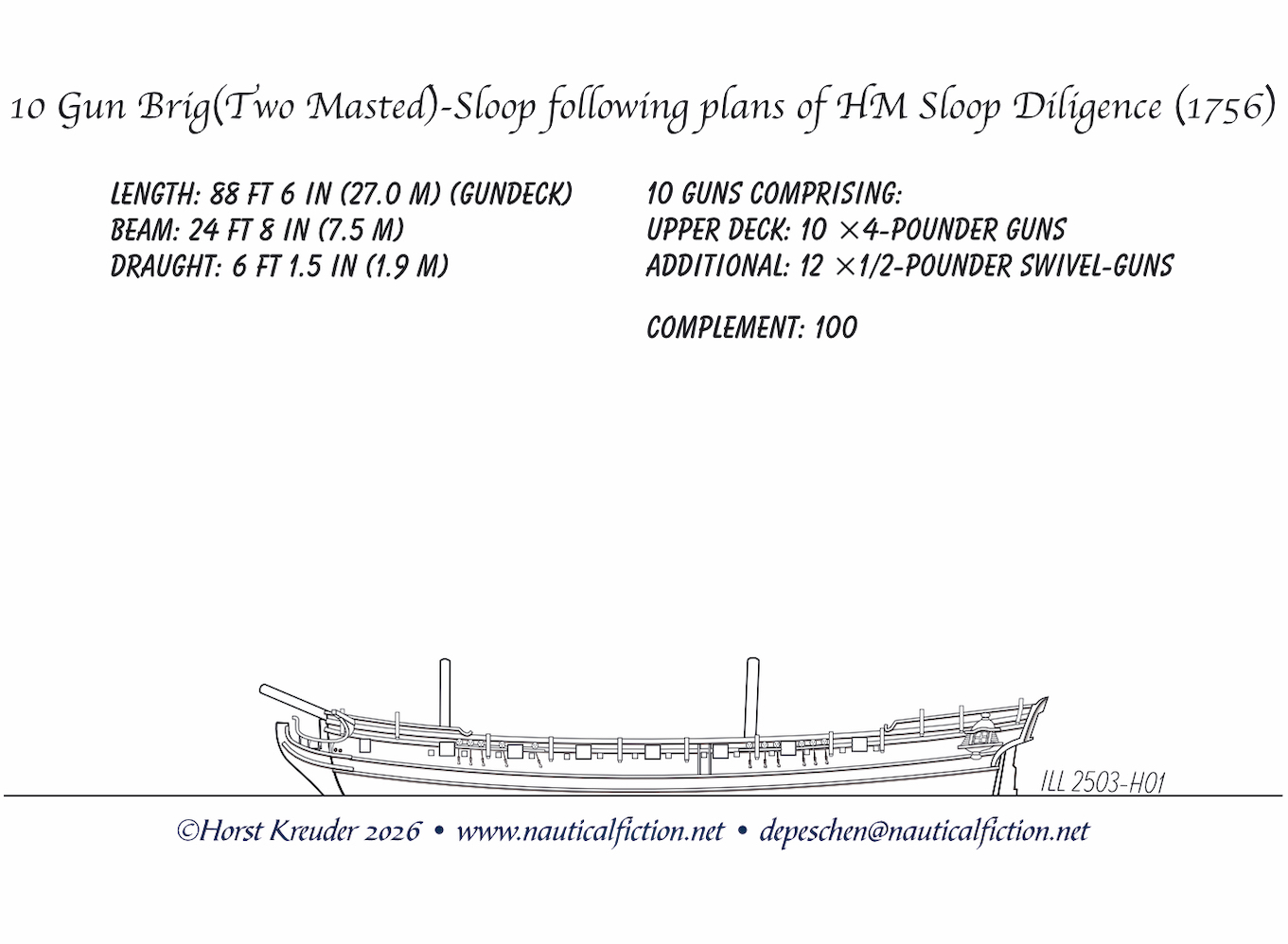
10 gun brig(rigged)/two masted sloop
With the increasing demand for ships for naval warfare, more and more small and inexpensive vessels were deployed. This led to the Royal Navy also using armed brigs, primarily for light escort duties.
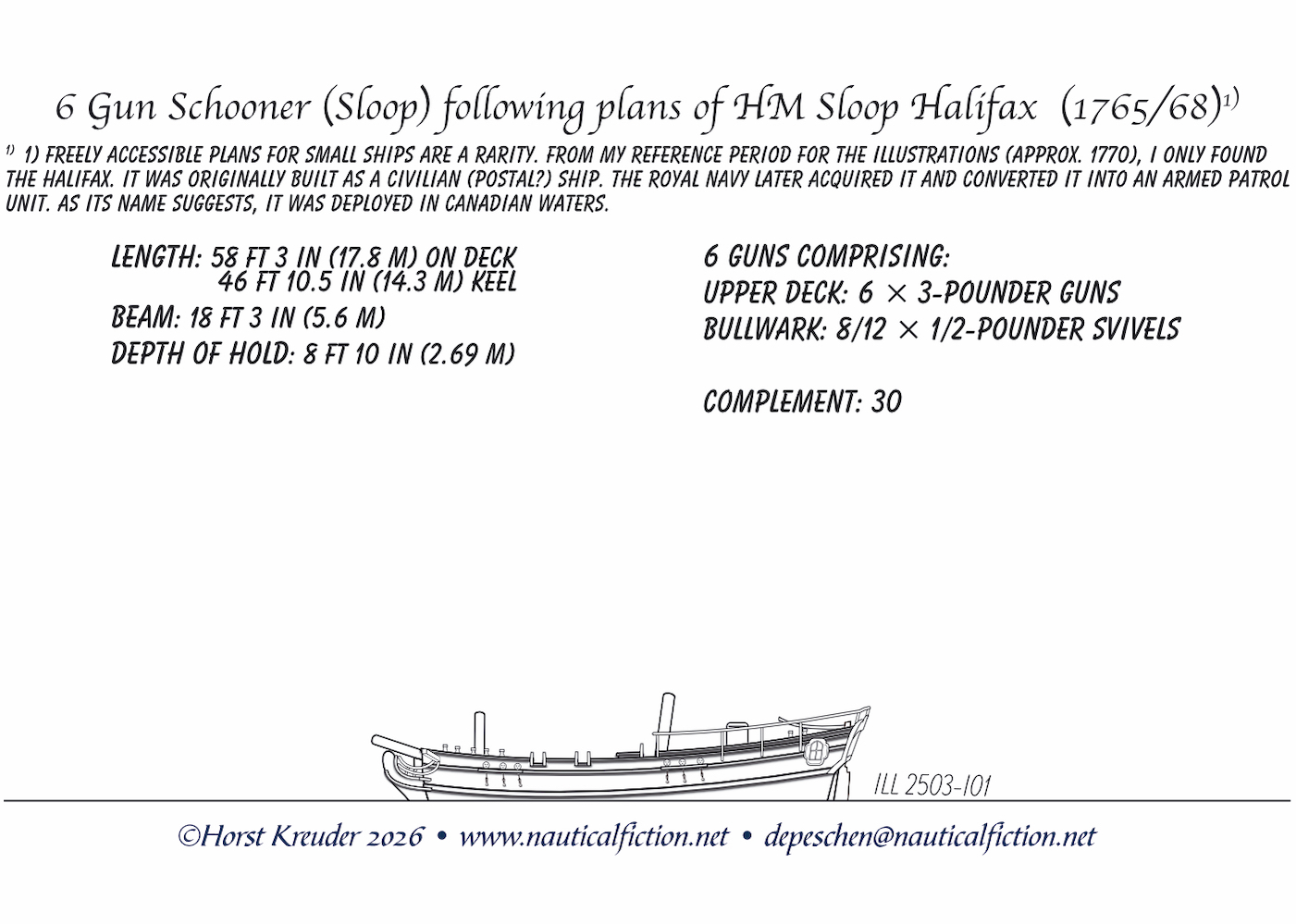
Sloop / Schooner (Here) 6 guns
Schooners were used when fast and manoeuvrable vessels were required. With their large gaff sails, they also performed well when sailing close to the wind. The Halifax shown here is barely larger than an ocean-going cutter. Depending on their size, schooners were used for coastal security, hunting pirates or as privateers.
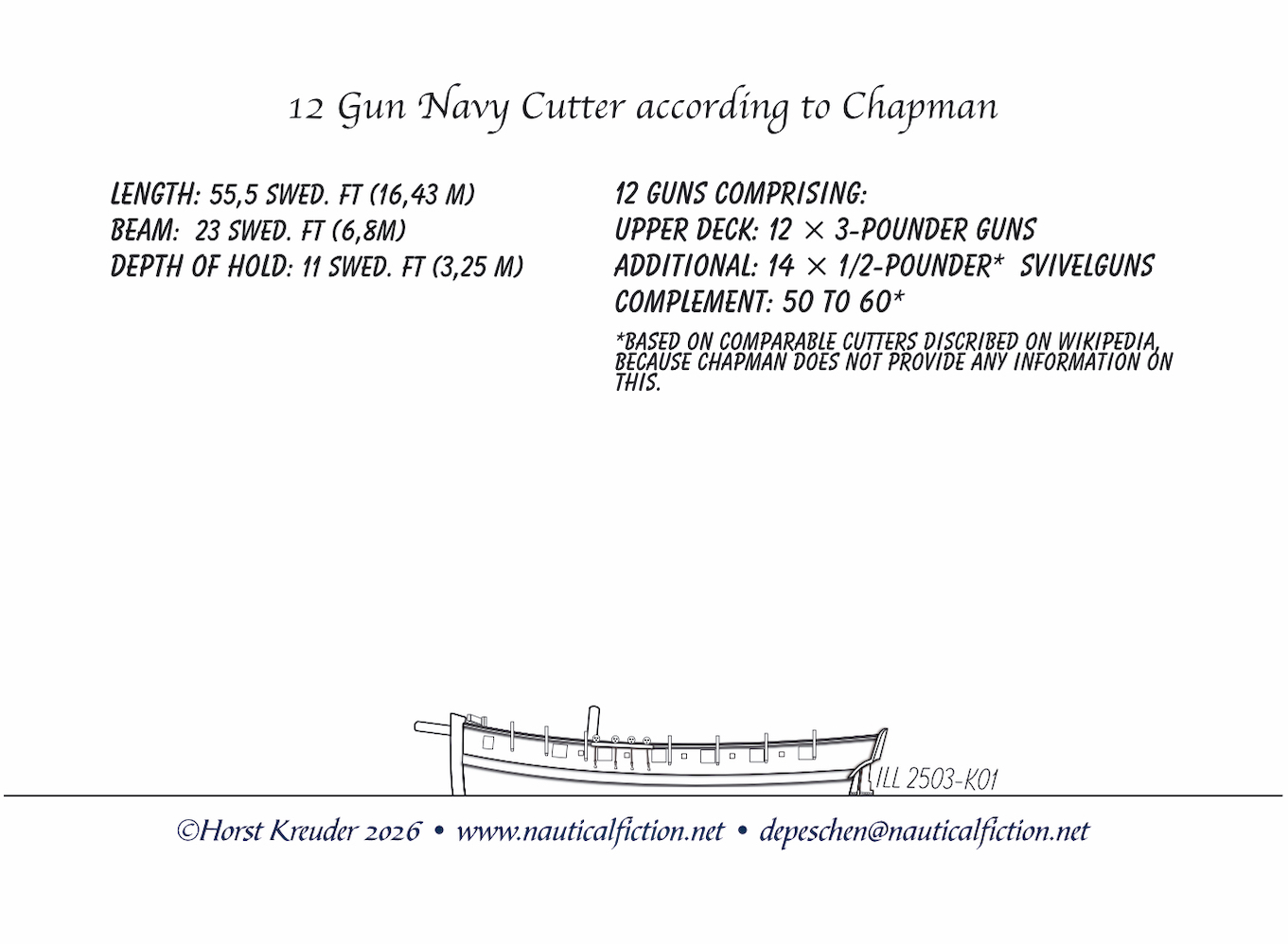
Armed Cutter (Sloop) with 12 guns
The armed cutter – the smallest non rated warship. It had quite powerful armament for its size and, with square rigging, a large sail area. This made it ideal for light patrol and courier duties.
Leave a Reply