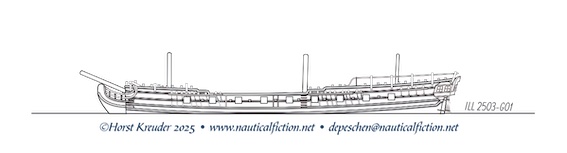
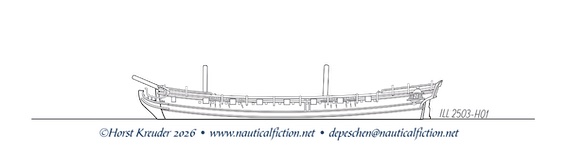
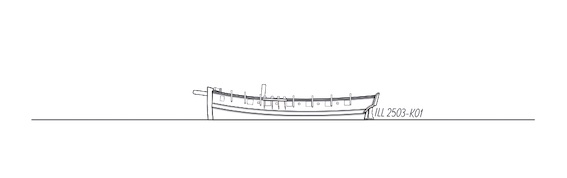
In the Royal Navy, ‘sloop’ did not refer to a specific type of ship. Rather, it was a collective term for all vessels that were not assigned to the rates and were therefore not considered true warships.
Originally, these were probably single-masted auxiliary vessels, as ships with around 10 guns were already ‘rated’.
Over time, naval warfare evolved away from pure fleet battles. This made the tasks for warships more diverse, and many also required units below the rates.
The process began slowly in the 17th century and then accelerated in the 18th century, spurred on by the growth of the colonial empires. These were tasks that went far beyond the capabilities of small single-masted vessels.
The non-rates grew, like the large capital ships of the rates, with their tasks. And after the lower limit for the sixth rank was raised to 20 guns, small full-rigged ships were also included. Nevertheless, the Navy kept the term “sloop” for all unclassified ships.
In other navies, the terminology was more nuanced. Full-rigged ships were called corvettes. Other ships were named according to their rigging: (war) brig, schooner, cutter.